5 min read
How to Read French Handwriting
Read French handwriting with repeated-word comparisons and a three-step review workflow. Check accents, names, and dates before translating the text.
On this page
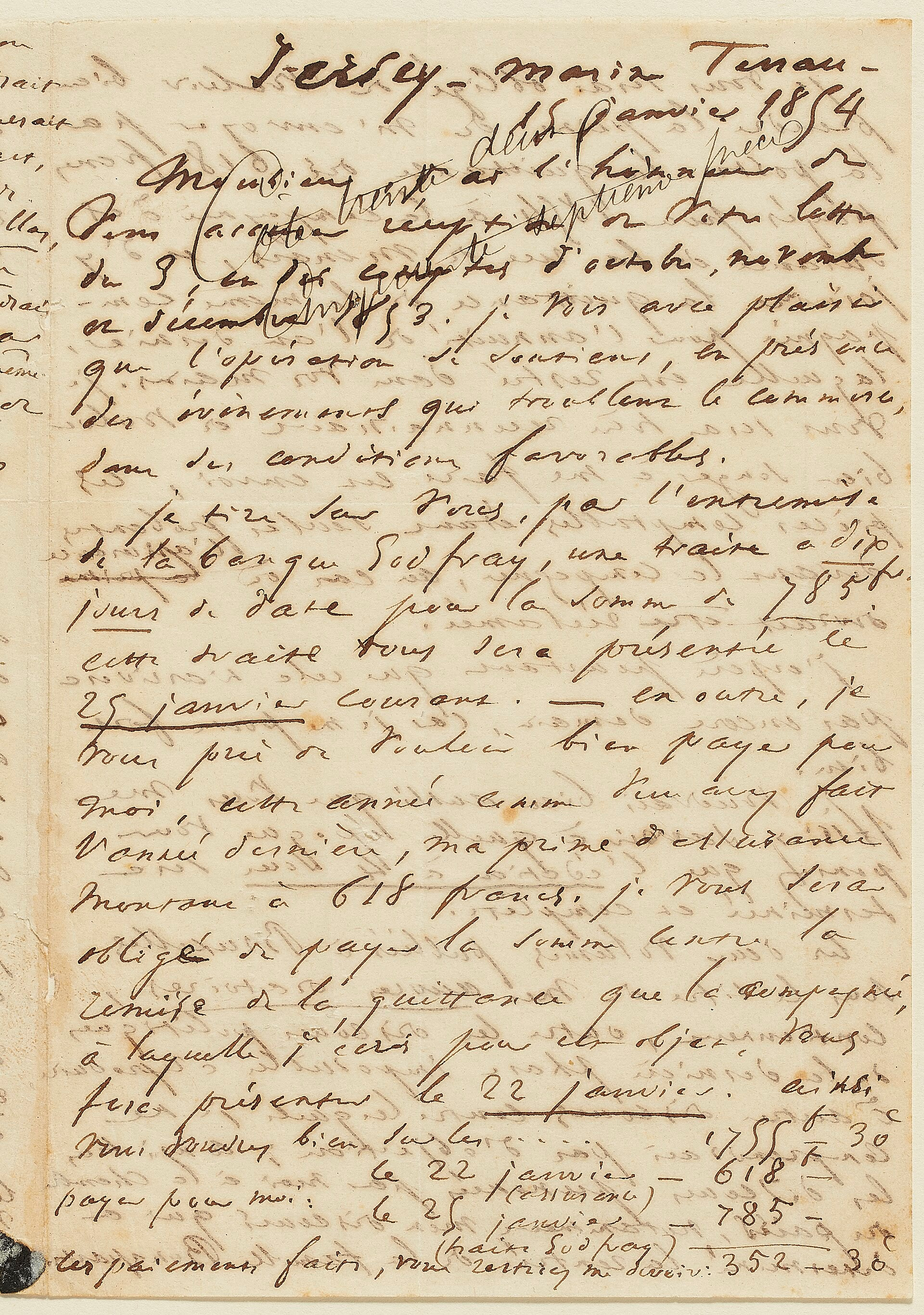
Read French handwriting by separating two questions: which letters are visible, and what the French words mean. Start with familiar wording, compare repeated handwriting, and preserve accents and abbreviations. A transcription can help you examine a document, but a smooth English translation is not proof that every French name was read correctly.
Identify the French document
Record the date, place, document type, and page reference before interpreting the handwriting. A French civil register uses recurring fields, while a personal letter follows its own structure. Separate printed headings from handwriting, and check whether a margin or signature was added by a different writer.
Use repeated French wording as evidence
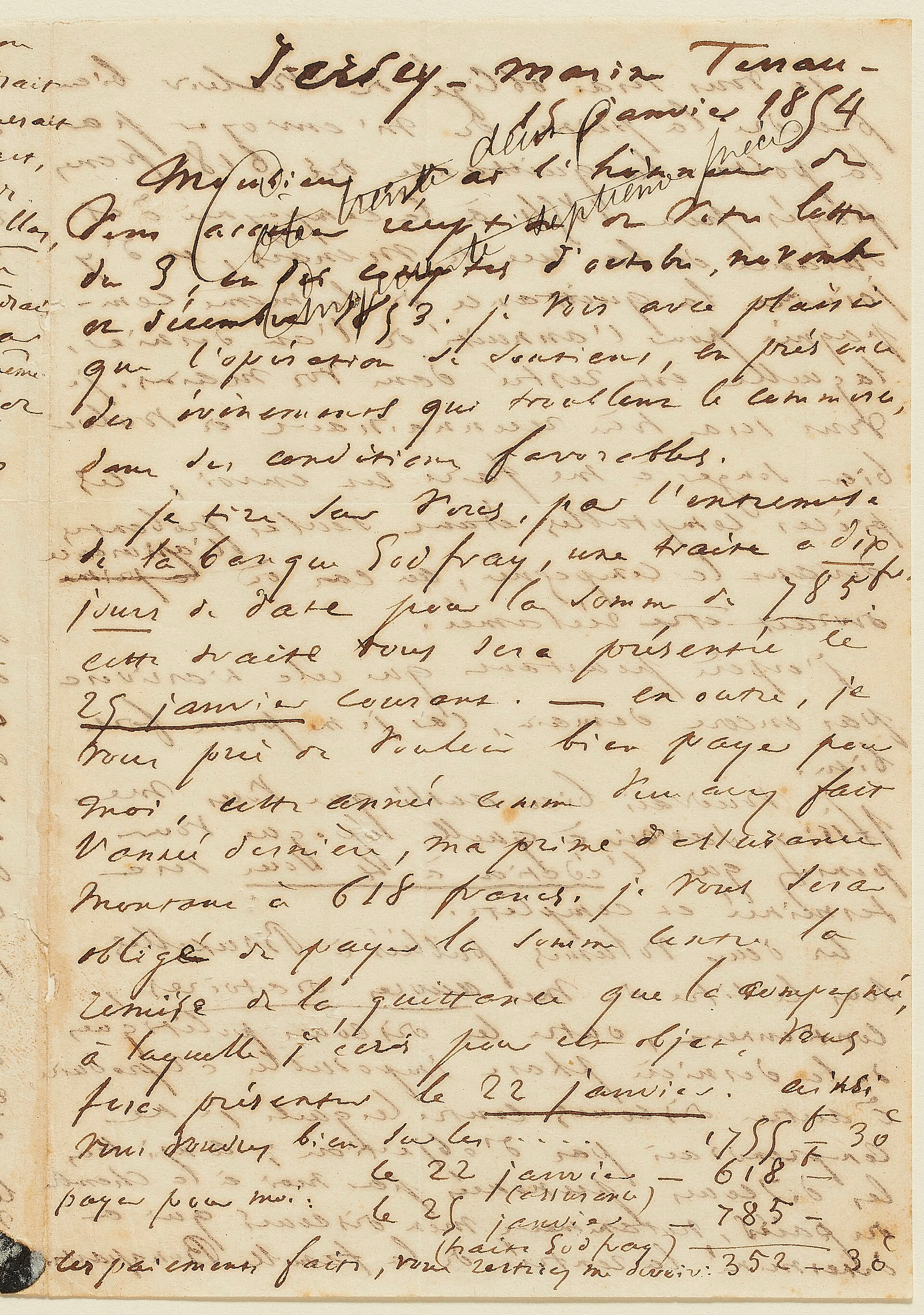
Find words you can support from the handwriting, not just words you expect. A date formula or repeated place name can provide useful examples of letters. In French records, familiar wording such as “né” or “née” can help orient a passage, but check its role in the sentence before assigning the event or person.
| French detail | Compare in the handwriting | Review decision |
|---|---|---|
| An accent or cedilla | Other clear marks by the same writer | Keep the visible spelling |
| A personal name | Repeated capitals and endings elsewhere | Do not replace unfamiliar handwriting with a familiar name |
| An abbreviation | Similar forms in neighboring French entries | Copy it before adding an expansion in a note |
The handwriting of a French surname may differ from its modern spelling. Keep the source form first. A genealogy index or dictionary can suggest a reading, but return to the handwriting to test the letters. In a register, compare nearby French entries without borrowing a name from the wrong row.
How to read French handwriting step by step
Use the French cursive reader to create a draft, then review the French text beside the handwriting. Keep transcription separate from translation throughout this workflow.
1. Upload the French handwriting image
Select browse files or drag in a clear image or PDF. Keep complete handwriting lines and the heading visible. Supported formats include PDF, JPG, PNG, WebP, and HEIC. Check the preview and upload a PDF alone rather than mixing it with images.
2. Convert and compare the French text
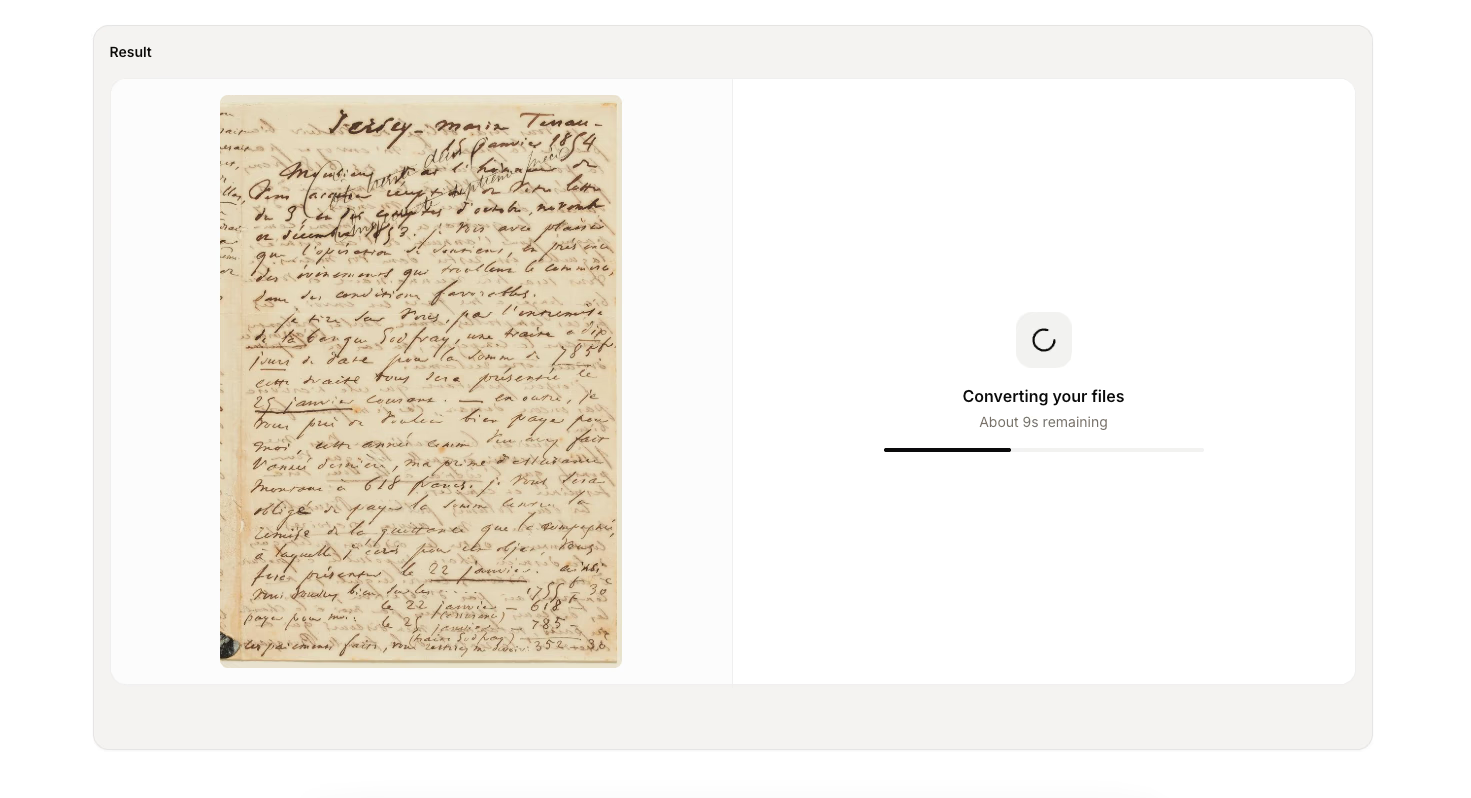
Select Convert and wait for the draft. Compare the French text with the handwriting line by line. Check accents, word endings, and punctuation without silently rewriting historical wording. When a line seems implausible, examine the handwriting rather than accepting a sentence because it sounds grammatical.
3. Review names and export the French transcription
Recheck personal names, places, dates, and unclear handwriting. Keep unresolved letters marked. Use Download for TXT, Word, or Markdown, then store the French transcription with the image. If you need an English reading copy, translate the checked French version separately and keep names linked to the original handwriting.
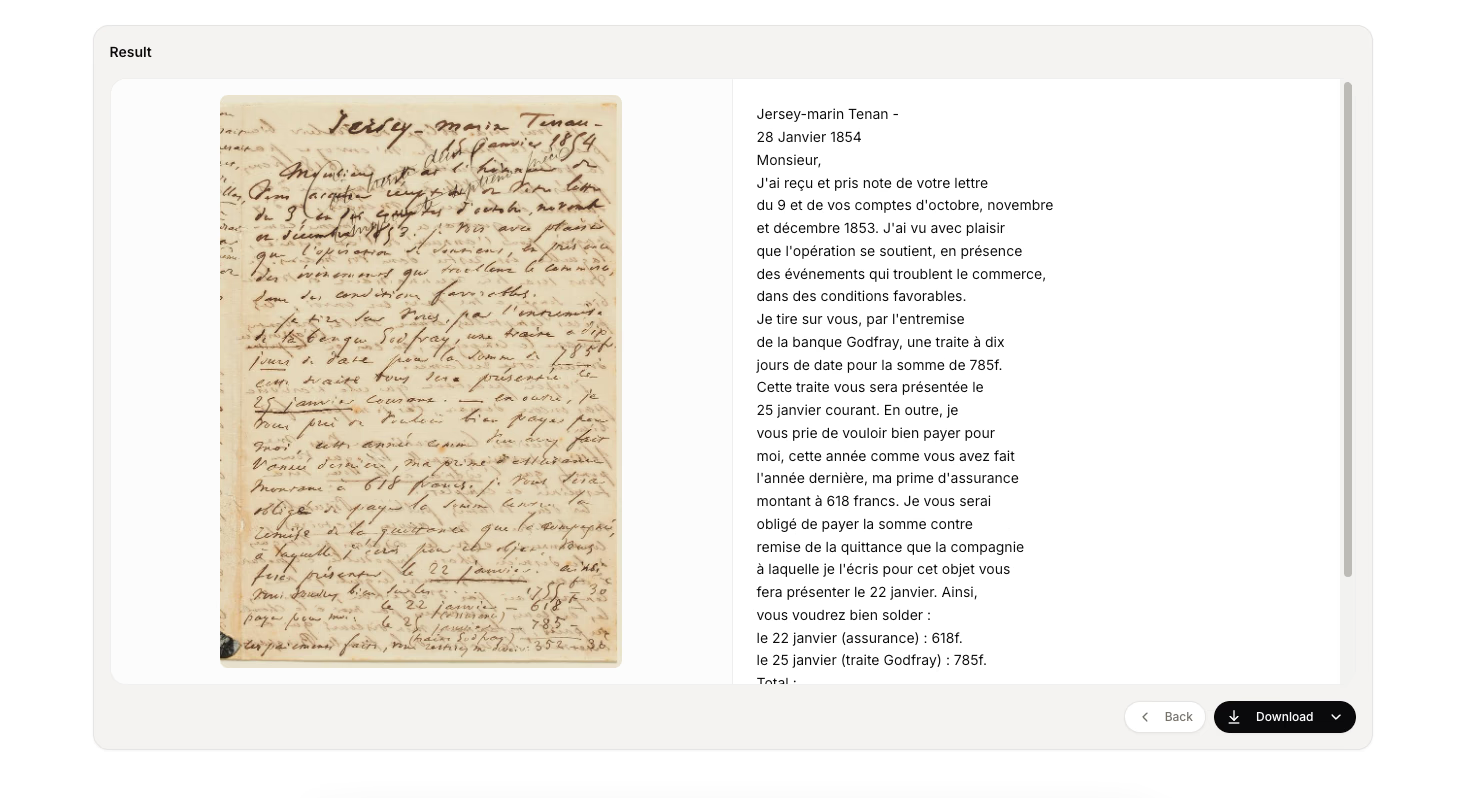
Review a name before translating
Suppose an entry appears to contain a familiar family name. First compare the capital and ending with other handwriting on the page. Check any accent against the visible mark. Record the spelling you can defend, then note possible modern equivalents separately. The same method applies to French place names that a translation tool might otherwise normalize too confidently.
Use context to test, not fill gaps
For broader preservation steps, see the old letters workflow. For image problems affecting the handwriting, use the difficult handwriting guide before attempting another French transcription.
Compare French handwriting with a draft
Review the original words and names before saving or translating the transcription.
Frequently asked questions
- Can I read French handwriting without speaking French?
A recognition draft can help identify words, but French language knowledge is valuable for review. Ask a knowledgeable reader about uncertain passages, especially when handwriting obscures a name or changes an event description.
- Should I remove accents from French handwriting?
Preserve visible accents in the French transcription. Compare doubtful marks with the writer’s other handwriting rather than adding accents solely from a modern spelling expectation.
- Does French handwriting recognition provide an English translation?
Transcription records the French words; translation explains them in another language. Check the handwriting first and keep a translated reading copy separate from the source transcription.