5 min read
How to Transcribe Old Letters: A Practical Guide with an Example
Learn to transcribe old letters using a real historical manuscript, a review checklist, and clear conventions for names, dates, and unreadable words.
On this page
To transcribe old letters, copy the visible words and mark uncertain readings. Start with the date, address, and greeting, then transcribe one line at a time. Keep the scan beside your transcription so another reader can check your decisions.
Prepare the source before you transcribe old letters
Scan every written side of your old letters. Keep margins and page edges visible, and transcribe the envelope separately if it carries an address or postmark. Give each document a stable identifier, such as family-letter-014, before naming its page images.
Adjust rotation or contrast on a working copy of old letters. Transcribe from the clearest image, but keep the original untouched. Mark words hidden by folds; sharpening cannot establish a missing stroke.
Choose how you will transcribe old letters
Transcribe a faithful source copy first; expand abbreviations only in a separate reading copy. Archives use different transcription conventions. Choose one and explain it at the top of your file, especially how you mark unreadable words in old letters.
| Source feature | What to transcribe | Keep separate |
|---|---|---|
| Unexpected spelling | Preserve the spelling you can read | A modern spelling or proposed correction |
| Unreadable word | Use [illegible], or the project's required marker | A possible reading and the reason for it |
| Crossed-out passage | Identify the deletion consistently | Your explanation of why it was removed |
| Name or date | Transcribe the visible name or date | A family-tree identification or expanded date |
When you transcribe old letters for an archive, follow its instructions. In a private collection, line numbers let a reviewer question a reading without editing the source image.
A real example: Lincoln's letter to Grace Bedell
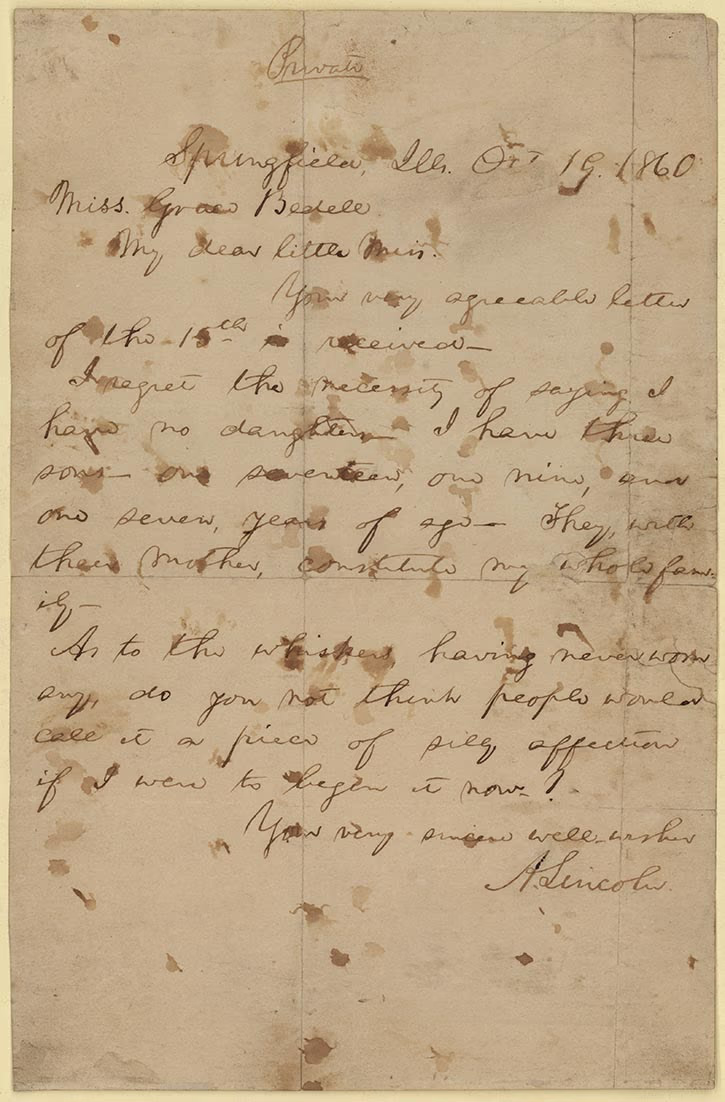
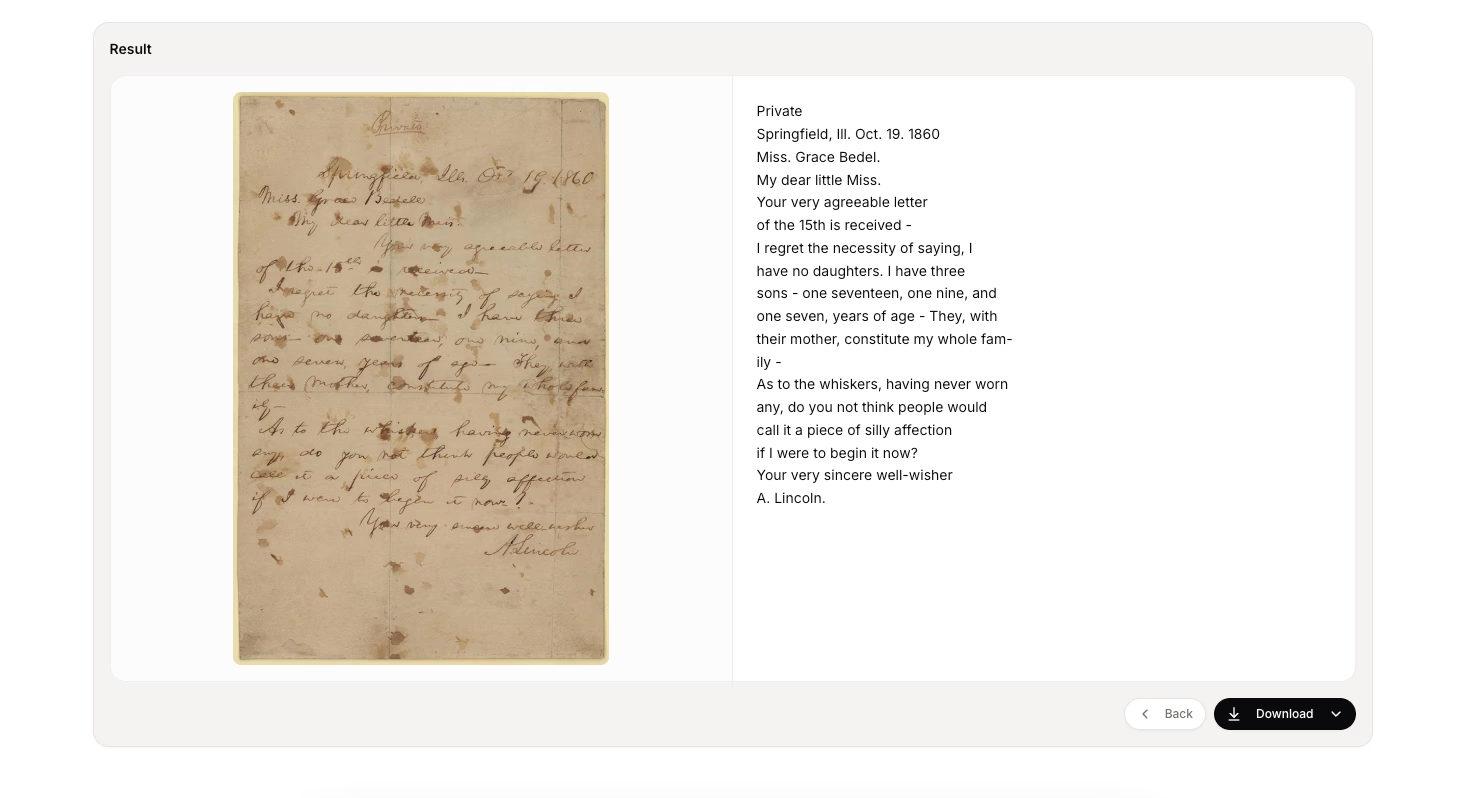
Learn to transcribe old letters with an identified manuscript: Abraham Lincoln's reply to Grace Bedell, October 19, 1860. The complete page provides a date, greeting, body, closing, and signature to compare.
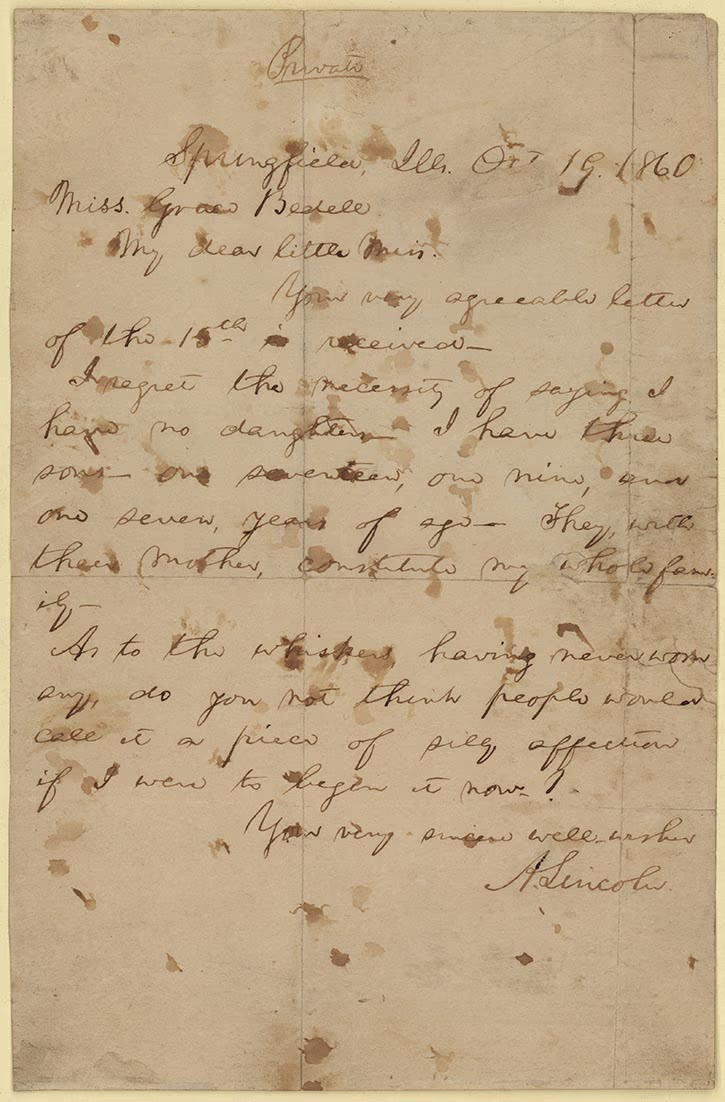
Transcribe the greeting My dear little Miss
. Compare its familiar letter shapes with the body, then transcribe the date and signature. Check the handwriting before consulting the catalog entry.
Transcribe old letters in two passes: record clear words first, then compare repeated letterforms to revisit gaps. The exhibition's transcription excerpt can help check the passage about whiskers; it does not cover every line.
A catalog is context, not a replacement for the page
How to transcribe old letters step by step
Use the old English handwriting reader to transcribe old letters in three steps. For old letters in German, choose the German cursive reader and follow the same process.
1. Upload a clear image of your old letters
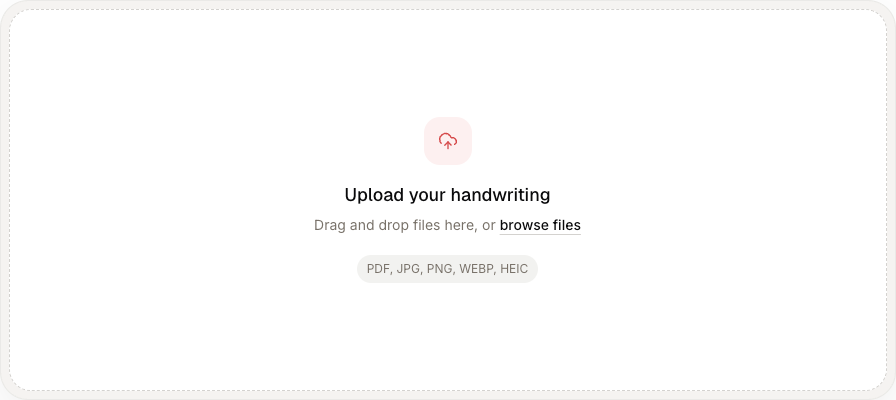
Drag your file into the upload area or select browse files. Use PDF, JPG, PNG, WebP, or HEIC. To transcribe old letters with several pages, upload one PDF alone or separate images in page order. Check the preview; do not mix a PDF with images in one job.
2. Convert your old letters into a text draft
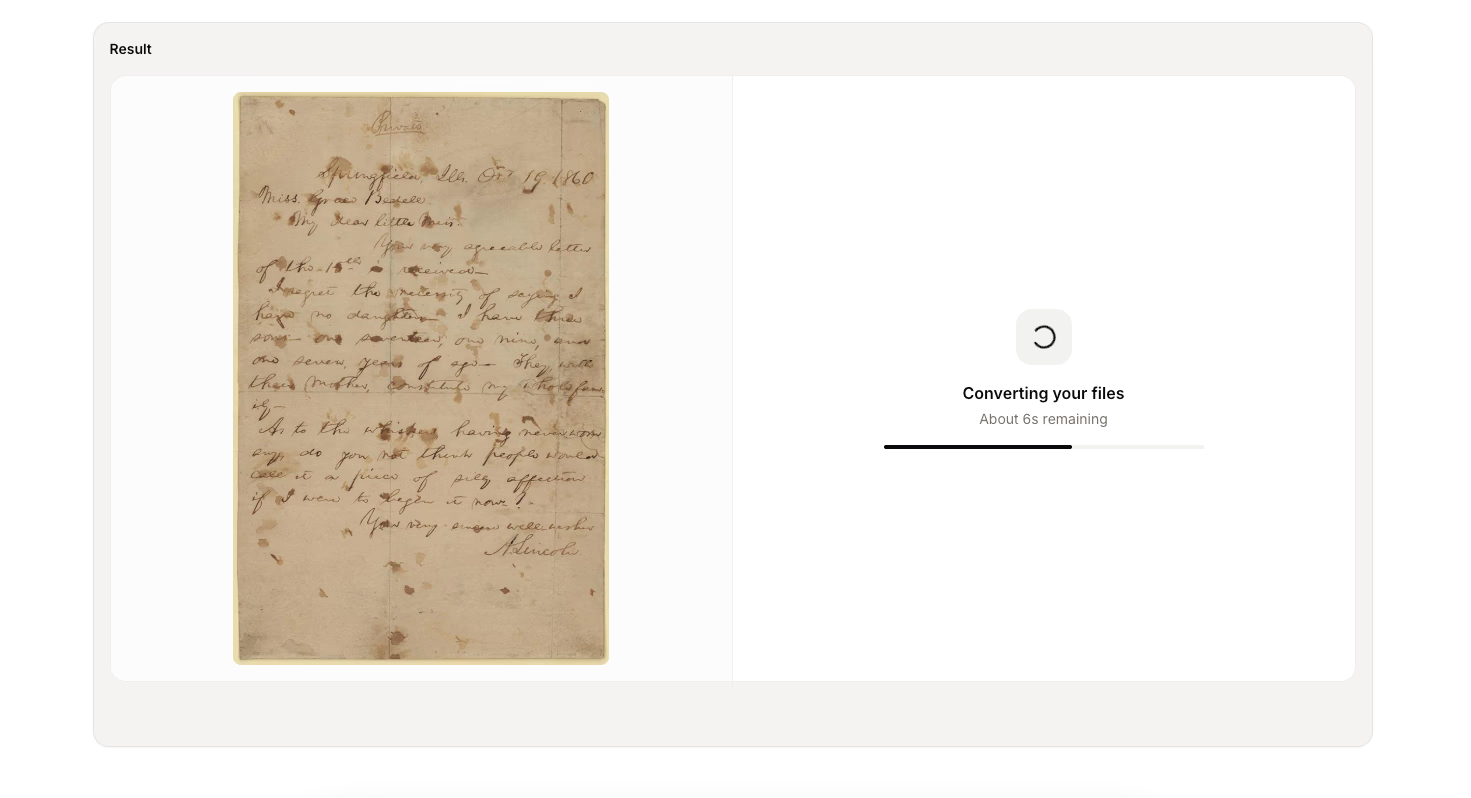
Select Convert after uploading. The workspace shows the original on the left and transcription progress on the right. Keep the page open. When you transcribe old letters, save the first draft before making corrections so you can track changed readings.
3. Review old letters beside the result and download
Compare your old letters with the transcription on the right. Transcribe uncertain passages manually when the draft misses them. Use the page controls for longer documents, then select Download for TXT, Word, or Markdown. Multi-page jobs offer Download All; keep old letters and their checked files in matching page order.
- Transcribe missing words at the start or end of each line.
- Review surnames, places, dates, amounts, and negatives separately.
- Compare recurring letterforms within the same writer's hand.
- Mark unresolved words for a second transcription review.
Keep old letters with the transcription
After you transcribe old letters, save the checked transcription with its images. Note the identifier, page order, reviewer, and review date. Export TXT for searching or Word for comments. Label any edited reading copy so relatives can distinguish it from the original.
Create a draft for your family archive
Compare the transcription with the original, then preserve the checked text alongside its source.
Frequently asked questions
- How do I transcribe old letters without changing their meaning?
Transcribe the original wording and spelling, and mark uncertain words. Keep explanations and modern spellings in a separate reading copy. This separates the transcription of your old letters from later family-history interpretation.
- Can AI transcribe old letters accurately?
AI can produce a draft transcription of old letters. Compare names, dates, and faded words with the handwriting before accepting it. A plausible sentence may still contain a misread letter.
- Which file should I keep when I transcribe old letters?
Keep the scan, checked transcription, and edited reading copy separately. Give each the same document identifier and page numbers so a quotation remains traceable to your old letters.